Storm Survival
Significantly lowers the chance of branch tear-out and whole-tree windthrow during wet season squalls.
Australian Standard AS4373 tree pruning to improve canopy health, airflow, and wet season storm resilience in Woolner.
Professional canopy care across Woolner, Parap, and Stuart Park.
Proper tree pruning Woolner is critical for maintaining healthy, long-lived amenity trees in the Top End. Our qualified arborists employ selective pruning techniques that strengthen tree structure and prevent storm failures.
Woolner's constant high temperatures and monsoonal rainfall drive rapid canopy growth. Unmanaged canopies become excessively dense, creating massive wind sails that expose trees rooted in shallow lateritic soil to windthrow during severe weather.
Significantly lowers the chance of branch tear-out and whole-tree windthrow during wet season squalls.
Prevents the entry of fungi and termites by removing dead or diseased wood with clean, correct collar cuts.
Ensures full compliance with local council verge clearance regulations without damaging public access.
We inspect branch attachments, deadwood distribution, weight distribution, and overall tree health.
We determine the appropriate AS4373 pruning methods (thinning, lifting, or deadwooding) required for the tree.
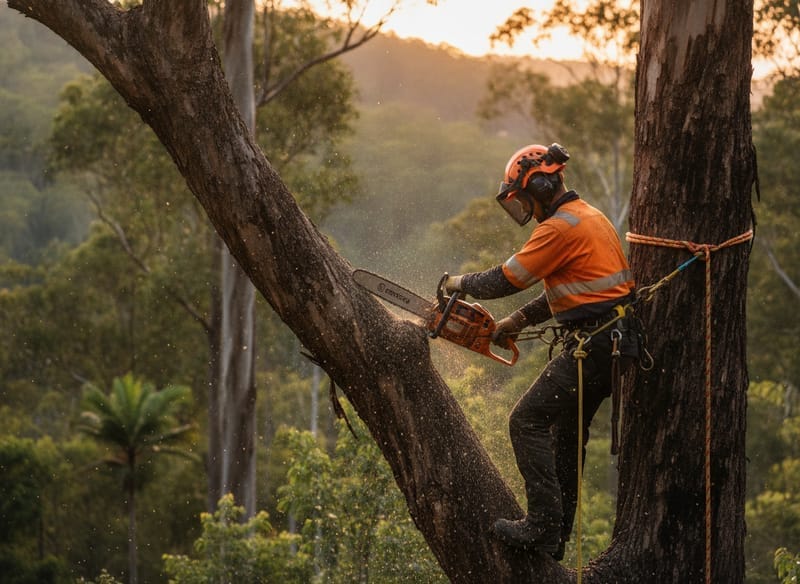
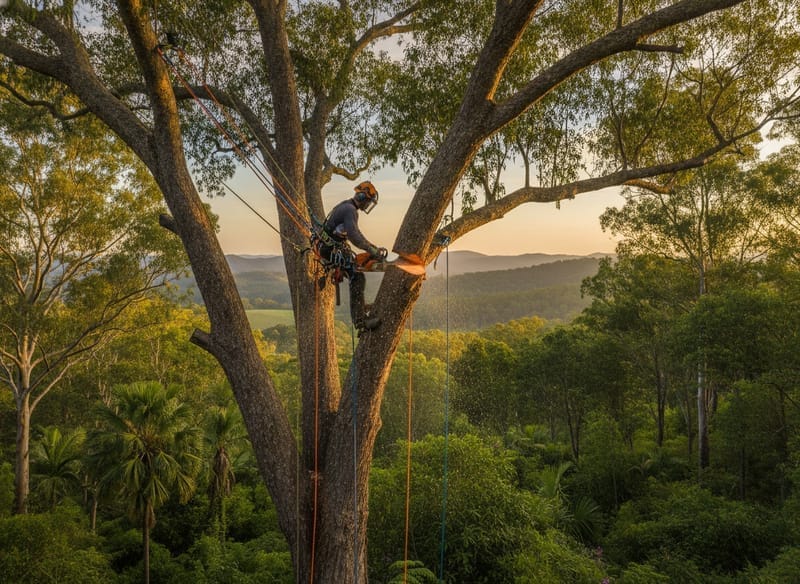
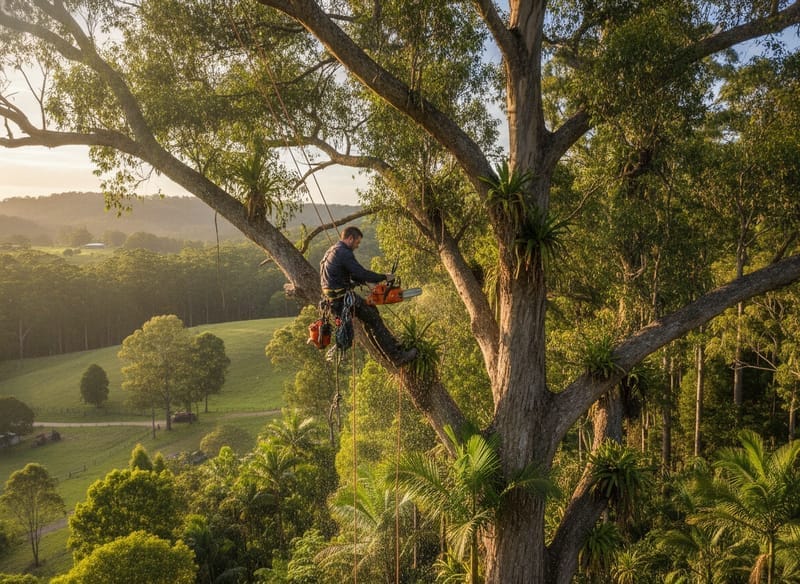
Our climbers use professional rope access or elevated platforms to make clean, correct collar cuts.
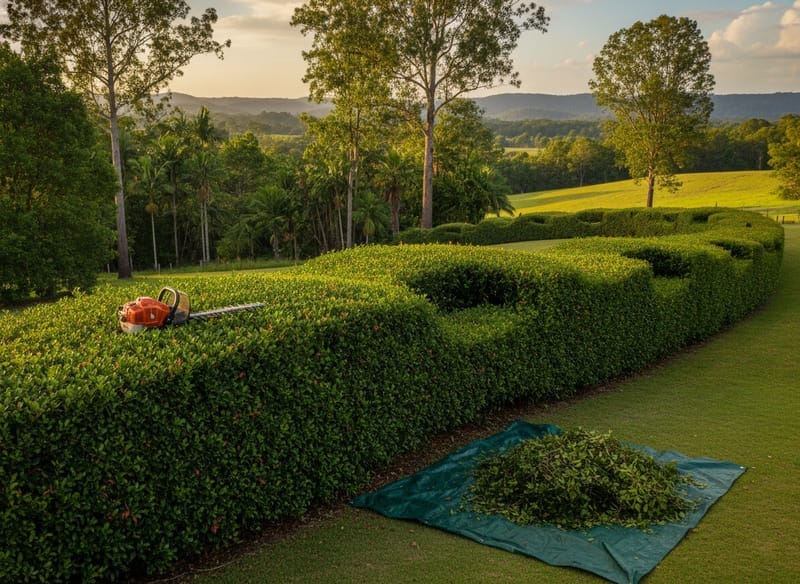
All prunings are chipped and cleared, leaving your lawns, driveways, and gardens neat.
Maintaining the canopy over your Woolner property requires more than just a quick trim before the wet season. For homeowners, developers, and property managers seeking reliable Tree Pruning Woolner, our qualified climbing team provides structural, AS4373-compliant canopy management. We understand the specific challenges of the Top End—fast tropical growth driven by warm overnight temperatures, and the extreme wind loads that come with our notorious cyclone season. Proper pruning preserves the health, aesthetics, and shade value of your established trees while significantly reducing the risk of branch failure during severe weather. Whether you are managing an oversized Rain Tree encroaching on your roofline or shaping native Northern Milkwoods along a residential boundary, our arborists focus on the long-term structural integrity of your trees. We bring professional expertise and local knowledge to every job, ensuring your canopy is safely prepared for whatever the monsoon season brings.
There is a crucial difference between proper arboricultural pruning and indiscriminate lopping or topping. Unfortunately, many trees in Darwin have been heavily lopped under the false assumption that hacking a tree in half makes it safer for cyclone season. In reality, lopping creates massive wounds that the tree cannot naturally seal. This accelerates internal decay and invites pest ingress. Worse, the tree responds to the stress by rapidly pushing out epicormic shoots. These weakly attached, fast-growing branches are highly prone to snapping in high winds, ultimately creating a much greater hazard than the original canopy. DIY pruning often results in flush cuts or jagged branch stubs, which bypass the tree's natural defence mechanisms located at the branch collar. When you hire our qualified arborist team, you are investing in structural pruning that respects the biology of the tree. We follow rigorous Australian Standards to ensure every cut is placed precisely. By carefully thinning the canopy to let wind pass through, or selectively reducing end-weight on over-extended limbs, we reduce the storm risk without destroying the tree's natural form or triggering hazardous stress-regrowth.
We employ a range of targeted pruning techniques to address specific structural, safety, or clearance requirements. All our canopy work is carried out by AQF-qualified climbers in strict accordance with the Australian Standard for the Pruning of Amenity Trees (AS4373).
Selective removal of small live branches throughout the canopy to reduce wind load and improve light penetration. We remove no more than 25–30% of live foliage in a single prune to prevent canopy stress and ensure the tree maintains its energy reserves.
Targeted removal of lower branches to increase vertical clearance for pedestrians, driveways, or street sight lines. We ensure the tree's structural balance is maintained while meeting local clearance requirements.
Systematic removal of dead, dying, diseased, or damaged branches. This is a critical safety measure for trees overhanging living areas, play spaces, and roofs, especially after severe storm events.
Early-life shaping of young or newly planted trees to establish strong architecture. We focus on promoting a single dominant leader and well-spaced scaffold branches for long-term stability in tropical weather.
Addressing specific site issues, such as achieving building clearance, managing a co-dominant stem, or redirecting growth away from overhead service wires without resorting to harsh lopping practices.
Our approach to pruning your trees is systematic, safe, and entirely transparent from the first call to the final cleanup. - Site Assessment and Quotation: We visit your property to evaluate the tree species, health, and structural defects. We discuss your specific goals—whether it is wind-loading reduction, solar access, or building clearance—and provide a detailed, obligation-free quote. - Work Method Planning: Depending on site access, we determine whether the job requires an Elevating Work Platform (EWP) or advanced rope-access climbing techniques. We plan our rigging systems meticulously to ensure cut branches are lowered safely without damaging your garden, fences, or underlying infrastructure. - Execution to AS4373 Standards: Our AQF-qualified climbers ascend the tree and perform targeted cuts. We cut strictly at the branch collar, avoiding harmful stubs or flush cuts, and never remove more than the allowable percentage of live foliage. - Processing and Cleanup: As branches are lowered, our ground crew processes them through our commercial wood chipper. We rake and clear the site entirely, leaving your yard neat and tidy. We can remove the mulch in our tipper trucks or leave it on-site for your garden, depending on your preference.
Delivering high-quality tree care requires strict adherence to industry regulations and safety protocols. All our canopy management work is governed by AS4373 (Pruning of Amenity Trees), ensuring every cut supports the long-term health of the tree. Our crews are led by AQF Level 3 climbing arborists equipped with top-handle chainsaws and modern rope-access gear, enabling safe operation even in confined Woolner residential spaces. We are fully insured with comprehensive Public Liability and WorkCover for all staff, protecting you and your property at all times. Furthermore, we maintain all required high-risk licences, including working at heights and elevating work platform (EWP) tickets, ensuring total worksite compliance.
Proper canopy management in Woolner requires a deep understanding of Darwin's monsoon tropics and extreme weather drivers. Following the severe impact of Cyclone Fina in November 2025, and Cyclone Marcus before it, the structural integrity of our local canopy has never been more critical. Darwin sits on lateritic red soil with a hardpan that restricts rooting depth. Combined with a tendency for balled root systems from overwatering, top-heavy trees are highly susceptible to windthrow during wet season squalls. When scheduling Tree Pruning Woolner, it is important to factor in our local tree species. Fast-growing, densely canopied trees like African Mahogany or Sea Almond require regular, strategic crown thinning to reduce their sail area and wind resistance. Conversely, robust native species like Banyan or Darwin Woollybutt benefit from careful deadwooding to safely clear storm-damaged limbs. Unlike other jurisdictions, the City of Darwin does not require a permit for tree pruning on standard private residential blocks, allowing us to respond quickly. However, residents must comply with By-law 103, which obliges you to trim vegetation overhanging public verges and footpaths—a compliance service our arborists routinely provide.
Proper pruning sets your tree up for long-term health, but ongoing monitoring is essential in our fast-growing tropical climate. Following a structural prune, ensure your tree receives deep, infrequent watering during the dry season to encourage downward root growth rather than shallow surface rooting. Avoid dumping fresh, unaged mulch hard against the trunk, as this can cause collar rot in Darwin's high humidity. Keep an eye out for any sudden dieback or fungal fruiting bodies on the trunk, which can be signs of internal decay. Given the rapid growth rates driven by year-round warm temperatures, we recommend having our arborists re-inspect large shade trees every two to three years to maintain optimal safety and wind clearance.
Tree pruning costs depend on tree dimensions, access, and the scope of trimming required.
We provide honest, competitive, fixed-price pruning quotes with no hidden charges or unexpected extras.
We provide AS4373 tree pruning across Woolner and inner Darwin suburbs.
Book a comprehensive AS4373 canopy pruning consultation for your Woolner property.
Get a Free Quote