Safe Property Recovery
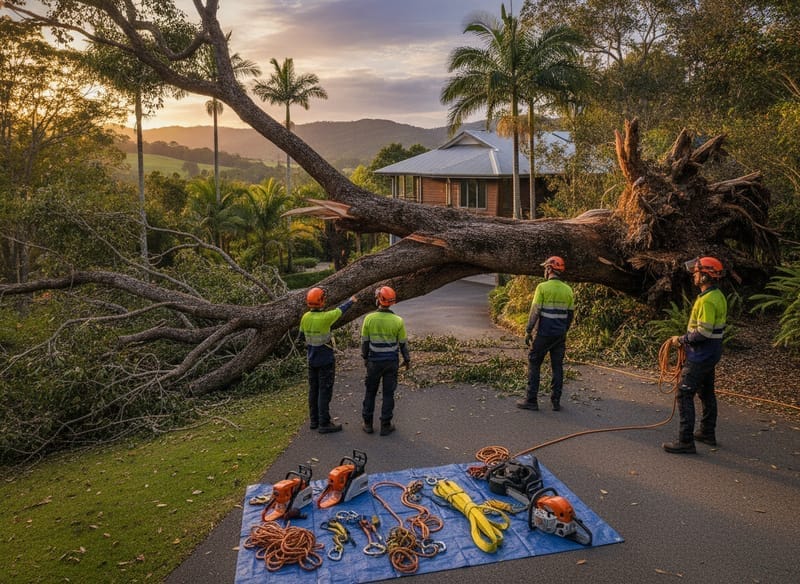
Clear hazardous hanging limbs and unstable trunks so repair tradies and families can access grounds safely.
Post-cyclone cleanup, multi-tree debris processing, and insurance-ready damage assessments across Stuart Park.
Restoring storm-affected properties across Stuart Park, Parap, Fannie Bay, and Darwin.
When tropical lows and cyclones hit Darwin, fallen trees and fractured canopies leave properties vulnerable. Storm Damage Tree Removal Stuart Park provides complete post-storm cleanup, removing dangerous hangers, uprooted trunks, and heavy timber piles.
During severe events like Cyclone Fina, Stuart Park's mature African Mahoganies and poincianas suffered severe canopy fractures. Soil saturation in the local red gravelly clay allowed shallow root systems to roll out of the ground.
Clear hazardous hanging limbs and unstable trunks so repair tradies and families can access grounds safely.
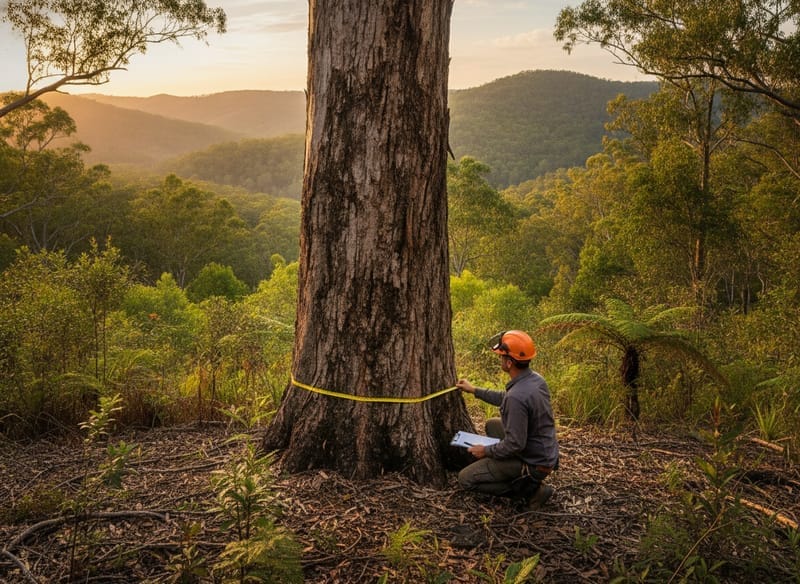
Detailed arborist invoices and damage reports streamline insurance claim approvals.
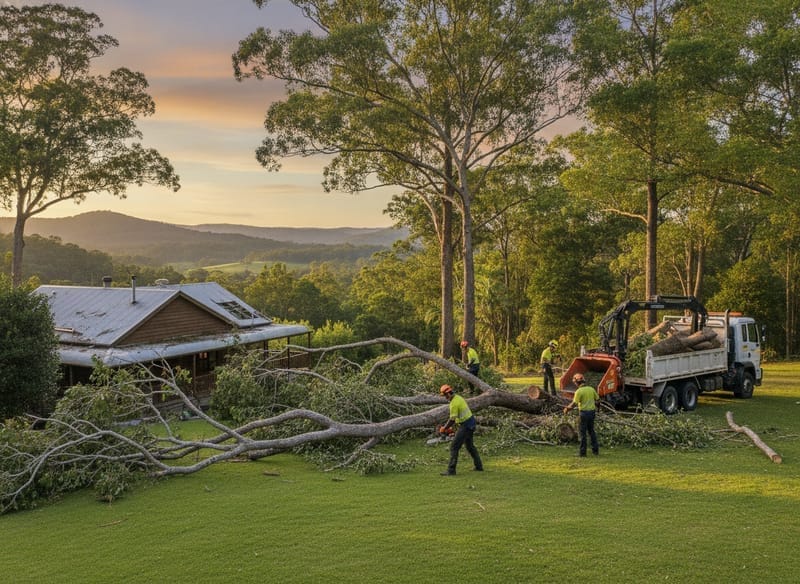
High-volume processing clears massive green waste piles, leaving yards tidy and free of rot.
We inspect all trees on the property to identify structural failures, cracks, and safety risks.
You receive a structured quote breaking down tree removals, remedial pruning, and waste processing.
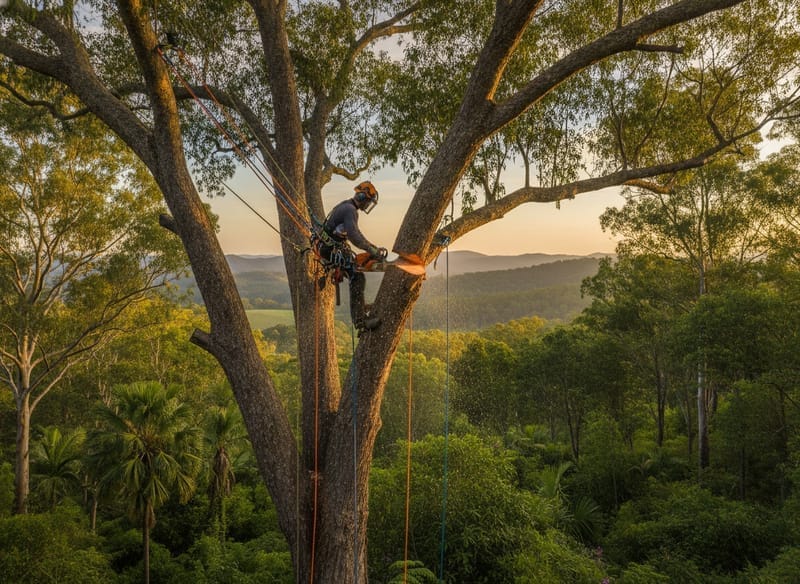
Our crew cuts and lowers hung-up branches, extracts fallen trunks, and stabilizes damaged trees.
All fallen debris is processed through heavy-duty chippers and hauled from the premises.
The legacy of Cyclone Fina in November 2025 left a profound mark on our city's canopy. When high-velocity winds and saturated wet-season soils combine, the need for professional Storm Damage Tree Removal Stuart Park becomes an priority for homeowners, builders, and property managers alike. Darwin’s monsoonal climate ensures that our established urban trees grow rapidly, but the underlying lateritic hardpan severely limits their rooting depth. When cyclones or severe localized storms hit, large specimens are frequently uprooted or suffer catastrophic branch failure. Our team understands the immense stress that severe weather brings to Territory property owners. Whether you are dealing with a massive fallen trunk crushing a boundary fence line, or hazardous hung-up branches threatening your roof, our qualified climbers are equipped to handle it. We rapidly deploy to secure your property, providing make-safe solutions and comprehensive clean-ups to ensure your site is completely hazard-free and accessible.
Tackling storm debris without professional training is a recipe for disaster, which is why executing proper Storm Damage Tree Removal Stuart Park requires highly specialized skills. When a severe weather event tears through our suburbs, the resulting fallen timber stores massive amounts of unpredictable kinetic energy. A single incorrect chainsaw cut on a tensioned branch or a compressed trunk can cause the timber to snap back with lethal force. Furthermore, under-qualified operators or 'cash-for-job' storm chasers often make a bad situation substantially worse. They might resort to outdated, damaging practices like lopping, which Australian Standard AS4373 (Pruning of Amenity Trees) explicitly condemns. Lopping leaves behind jagged stubs that promote rapid decay and weak epicormic regrowth, effectively guaranteeing a future hazard when the next monsoon arrives. Our team of AQF Level 3 climbing arborists approaches every post-storm scenario with strict adherence to safety and arboricultural standards. We systematically dismantle compromised trees using advanced rigging, ensuring no secondary damage occurs to your home or surviving landscape. Instead of risking severe personal injury, property damage, or long-term harm to your remaining canopy, engaging our qualified arborists guarantees the cleanup is completed safely, correctly, and efficiently.
Our specialized arborists utilize industry-leading techniques and heavy-duty equipment to safely dismantle and process hazardous, storm-damaged vegetation across Darwin.
We assess the property to prioritize hazards. Trees threatening structures, powerlines, or accessways are isolated and stabilized first, mitigating the immediate danger before full processing begins.
For heavily compromised trees or failed canopies suspended over roofs, our AQF-qualified climbers use advanced double-rope rigging techniques to lower timber in controlled sections, preventing secondary impact damage.
When catastrophic structural failure occurs in tight house blocks, we utilize crane-assisted removals. This allows us to lift massive, unstable root plates or snapped trunks safely out of confined spaces without risking ground crews.
Cyclones frequently uproot trees completely due to our shallow lateritic hardpan. We process these massive, hazardous root plates on-site and use heavy-duty grinders to reduce the remaining stump to 150-300mm below grade.
Navigating the aftermath of a catastrophic weather event is stressful. We have refined our emergency response to be as seamless and transparent as possible. - Step 1: Emergency Assessment: Contact our team directly. We rapidly deploy an arborist to your site to assess the scale of the failure, identifying immediate hazards like hung-up limbs or uprooted trunks leaning on structures. - Step 2: Make-Safe Action: If there is an active threat to life or property, our priority is securing the zone. We isolate the area and perform emergency cuts to relieve tension or remove overhanging deadwood. - Step 3: Detailed Insurance Quoting: We provide a comprehensive, itemised quote detailing the scope of work for each affected tree, alongside high-resolution photographic evidence to support your insurance claim. - Step 4: Systematic Dismantling: Once approved, our team arrives with top-handle chainsaws, heavy-duty chippers, and necessary access equipment. We safely dismantle the storm-damaged vegetation, meticulously lowering timber to protect your remaining assets. - Step 5: Site Cleanup: We process and chip all branches into reusable mulch, cart away heavy logs in our tipper trucks, and rake the site clean so you can begin the broader recovery process.
Tree failure in cyclonic conditions is inherently dangerous, and the resulting cleanup requires strict adherence to documented safety protocols. Our business is fully insured with comprehensive public liability and WorkCover, protecting you, your property, and our staff during high-risk storm recoveries.
We conduct all restorative canopy pruning and hazard dismantling in strict accordance with AS4373 (Pruning of Amenity Trees). Every climbing arborist on our team holds an AQF Level 3 in Arboriculture, alongside current high-risk tickets for working at heights, EWP operation, and aerial rescue. When you hire us, you are securing fully qualified Territory professionals trained to manage the chaotic aftermath of extreme tropical weather safely.
Working in Stuart Park requires specific local arboricultural knowledge. The devastation of Cyclone Marcus in 2018 and the historic Category 3 Cyclone Fina in 2025 taught us vital lessons about Darwin's urban canopy. Our local lateritic red soil and its underlying hardpan severely restrict deep root growth. Combined with historical overwatering during the dry season, many established trees develop shallow, balled root systems. When the wet season saturates the ground and cyclonic winds arrive, species like the African Mahogany (Khaya senegalensis) and various Weeping Figs are incredibly prone to total root-plate failure. Conversely, native species like the Northern Milkwood and Sea Almond demonstrate much higher wind resilience. Fortunately, navigating the red tape for storm cleanups here is highly practical. The City of Darwin has virtually no regulation protecting vegetation on standard private residential blocks. There is no private land tree permit required to clean up a destroyed African Mahogany in your backyard, and the NT Planning Scheme's clearing overlays generally do not apply to urban residential zones, meaning we can commence your emergency removal.
Once our trucks leave, your property will be safe, accessible, and completely clear of dangerous debris. We strongly recommend retaining the processed woodchip mulch to spread across your garden beds; it helps retain vital moisture and insulates the soil during the blistering dry season. For any trees that survived the storm but sustained minor wind buffeting, keep a close eye on the canopy over the following weeks. Look for newly browning foliage, splitting bark, or signs of fungal fruiting bodies at the base. If you notice any sudden leaning or ground lifting around the structural root zone, contact our team for a follow-up risk assessment.
Storm cleanup costs depend on the volume of timber, structural entanglement, and property access.
We provide clear, comprehensive quotes suitable for insurance submission.
Providing storm damage cleanup across Stuart Park and surrounding Darwin suburbs.
Contact our team for fast storm debris removal and insurance claim support.
Request Storm Cleanup