Controlled Canopy Height
Keep fast-growing tropical trees within manageable bounds without ruining their structural strength.
Safe height management and structural canopy reduction for overgrown trees in Parap.
Providing canopy reduction and height control across Parap, Fannie Bay, Stuart Park, and Ludmilla.
When property owners search for tree lopping Parap, they are generally looking to manage an overgrown tree that threatens roofs, blocks light, or poses a storm hazard.
Indiscriminate tree lopping (flush topping) is particularly hazardous in Darwin's monsoon climate. Heavy topping cuts rot quickly in the wet season heat and produce rapid, weakly attached shoots. In Parap, where cyclonic winds test tree strength every year, we convert lopping requests into correct AS4373 crown reductions that achieve your clearance goals safely.
Keep fast-growing tropical trees within manageable bounds without ruining their structural strength.
Avoid creating weak, weakly attached shoots that are the first to snap and cause damage during high winds.
Lower the canopy profile to let natural light reach gardens and solar arrays while preserving valuable shade.
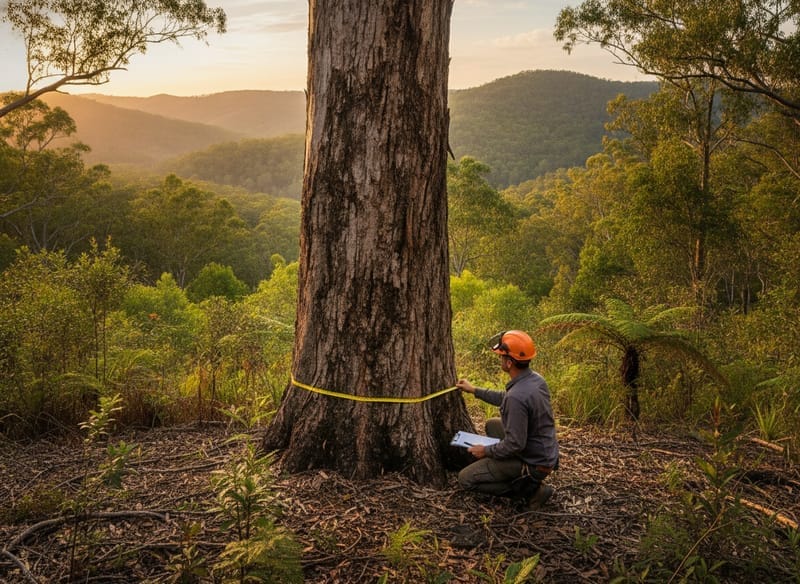
We evaluate the tree's height, structure, and species tolerance to determine the optimal reduction points.
We outline where lateral cuts will be made to reduce overall height while maintaining balanced sap flow.
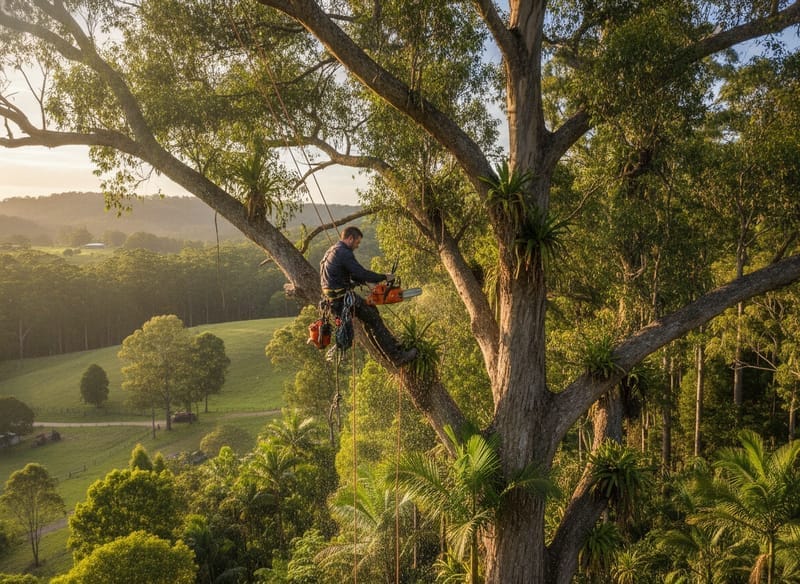
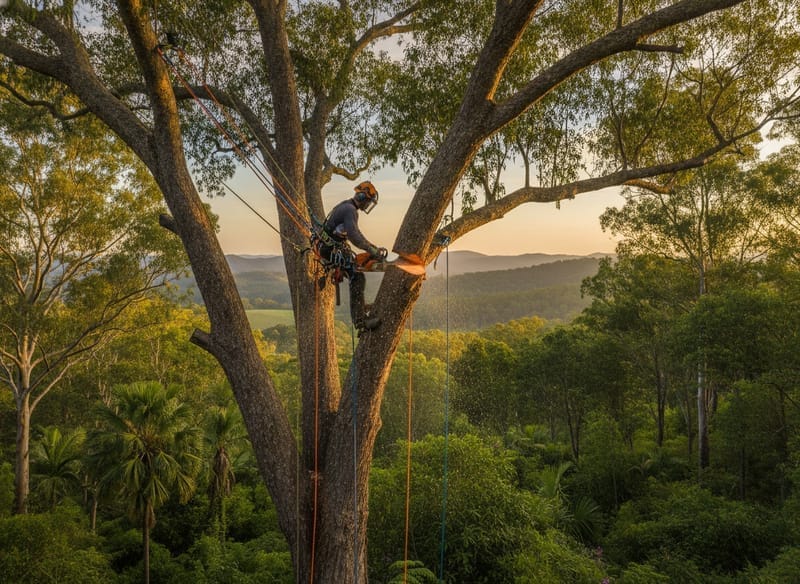
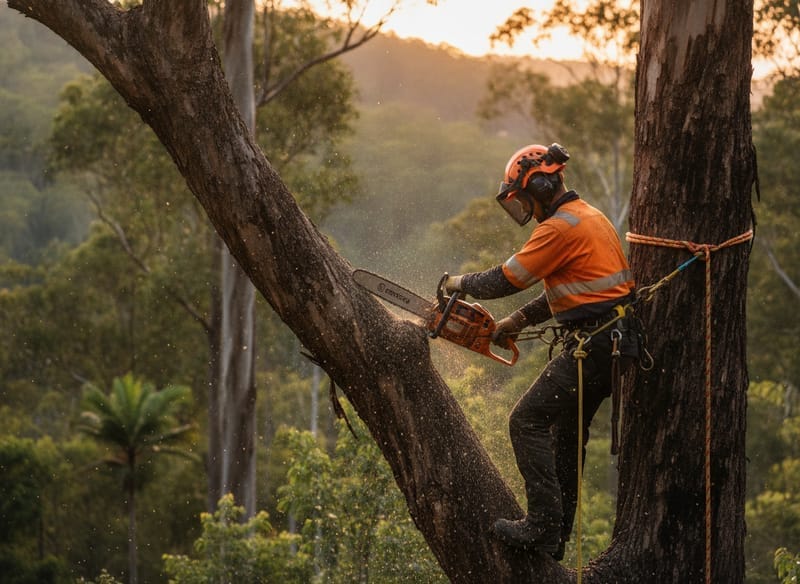
Our climbers make strategic cuts, lowering each large limb using controlled lowering lines.
All debris is fed into our commercial chipper, leaving your lawn and driveways tidy.
When it comes to managing the heavy canopy over your property, professional Tree Lopping Parap services are essential for keeping your yard safe, compliant, and prepared for the wet season. Here at Darwin Arborist, our team frequently speaks with locals who want to reduce the height or spread of an overgrown tree before the monsoon winds arrive. Parap is known for its established residential blocks and beautiful, mature shade trees, but when those canopies become too large, they can threaten rooflines, drop debris into gutters, and create severe hazards during severe weather.
While the term 'lopping' is commonly used by property owners to describe making a tree smaller, true arboricultural practice focuses on strategic canopy reduction. We don't just hack branches in half and walk away. Our climbers evaluate the structure of your trees—whether it is a sprawling Sea Almond, a Banyan, or a Darwin Woollybutt—and apply targeted pruning methods to achieve the size reduction you need without destroying the tree's health or stability. We take pride in delivering long-term solutions that protect your property and enhance your landscape.
A common mistake we see in Darwin's residential suburbs is the reliance on under-qualified operators performing indiscriminate, destructive lopping. In a strict horticultural sense, 'lopping' or 'topping' involves cutting branches back to stubs without respecting the branch collar. This is not just unsightly; it is incredibly dangerous. When a tree is topped, it responds by rapidly pushing out epicormic shoots. These new branches grow incredibly fast in our tropical climate, but they are weakly attached to the outer layers of the bark rather than the solid heartwood. When you combine weak epicormic growth with Darwin's severe storm season, the results are disastrous. The devastating aftermath of Cyclone Fina in November 2025, and Cyclone Marcus before it, proved that structurally compromised, top-heavy trees are the first to fail under cyclonic gusts. Furthermore, leaving massive open wounds from poor lopping cuts invites rapid decay and pest infiltration, effectively putting a ticking clock on the lifespan of your tree. Our team provides a professional alternative. When you ask us to make your tree smaller or safer, we utilise AS4373-compliant techniques. We apply selective crown reduction, thinning, and lifting. This ensures you get the clearance and hazard reduction you want, while maintaining a strong, wind-resilient framework that will stand up to the Territory's harsh wet season.
When clients ask us to 'lop' a tree, they usually need it made smaller, safer, or less intrusive. We achieve these goals using modern, AS4373-compliant arboricultural methods. Here is how our team delivers the results you need:
The safest alternative to destructive topping. We strategically shorten branches back to an appropriate lateral branch, reducing the overall height and spread of the tree while preserving its natural shape and structural integrity.
We selectively remove secondary branches from within the canopy to reduce wind resistance. Allowing cyclonic winds to pass through the tree, rather than acting like a sail, is critical for survival in Darwin's climate.
Removing the lowest branches of the tree to provide vertical clearance. This is essential for preventing branches from resting on roofs, clearing driveways for large vehicles, and meeting council by-laws for footpath access.
The targeted removal of dead, diseased, or dying branches before they fail. In our tropical environment, deadwood rots quickly and becomes a high-risk projectile during severe monsoon storms.
Safely cutting back foliage that is encroaching on powerlines or service drops. We utilise specialized EWP (Elevating Work Platform) equipment and highly trained operators to navigate high-risk electrical zones.
Our approach to a Tree Lopping Parap project is designed to be seamless, safe, and entirely transparent from the first phone call to the final cleanup. It starts with an on-site assessment at your property. One of our experienced arborists will inspect the tree, discuss your goals, and identify any site-specific hazards such as powerlines, tight access down the side of your house, or structural flaws in the timber.
Once we understand what you want to achieve, we provide a clear, upfront quote outlining the exact pruning techniques we will use. We explain how much of the canopy will be reduced—typically keeping live-crown removal below 30% to ensure the tree recovers well.
On the day of the job, our climbers and ground crew arrive with our trucks and commercial wood chippers. For established backyard trees, we often use rope-access climbing techniques to carefully dismantle branches without damaging the gardens below. Every cut is made to AS4373 standards. Finally, all green waste is processed through our chippers. We can leave the high-quality mulch for your garden beds, or our tipper trucks will haul it completely away, leaving your Parap property immaculate.
Safety and compliance dictate everything we do. Our team operates strictly in accordance with AS4373 (Pruning of Amenity Trees), ensuring that every cut promotes tree health and safety. Our climbers and ground operators hold all necessary qualifications, including AQF Level 3 in Arboriculture, Working at Heights, EWP (yellow card) tickets, and first aid certification.
We are fully covered by comprehensive public liability insurance and WorkCover for all our staff. This guarantees that when our heavy machinery, chippers, and chainsaws are operating on your property, you are completely protected against any unforeseen circumstances. We never cut corners on safety, equipment maintenance, or industry best practice.
Executing a successful Tree Lopping Parap job requires deep local knowledge. Parap is an established suburb with beautiful old gardens, but the underlying soil is challenging. Darwin sits on lateritic red soil with a hardpan that restricts deep root growth. This means large, fast-growing trees like the African Mahogany often have incredibly shallow root plates. If their heavy canopies are not regularly reduced and thinned, they are highly susceptible to windthrow when the ground waterlogs during the monsoon. The aftermath of Cyclone Fina in November 2025 was a stark reminder of this vulnerability. Thousands of poorly managed trees failed across the city. Regular, strategic canopy reduction reduces this 'sail area' and keeps top-heavy trees grounded. From a regulatory standpoint, City of Darwin is very straightforward. There is no private land tree permit required for standard residential blocks in Parap, meaning we can reduce or remove problematic vegetation without lengthy council delays. However, Council By-Law 103 does require property owners to keep overhanging vegetation clear of public footpaths and roads—something our team can swiftly rectify for you.
After our team has reduced your canopy, your tree will enter a recovery phase. Because Darwin's overnight minimums rarely drop below 23 degrees, growth is incredibly fast year-round. It is important to monitor the tree for any overly vigorous, straight-up epicormic shoots over the following wet season, though our AS4373-compliant cuts are designed to minimise this response. Ensure you are watering appropriately during the dry season, but avoid overwatering, which can lead to balled root systems and instability. We highly recommend having our arborists back for a quick canopy inspection every 12 to 18 months. Short, regular maintenance cycles are the most cost-effective way to keep your trees at a manageable size and safe for your family.
Canopy reduction pricing in Parap is determined by tree dimensions, growth density, and physical site access.
We provide transparent, upfront quotes on site before commencing any work.
Managing canopy heights and tree reductions across Parap and inner Darwin.
Speak with our qualified arborists for professional height reduction and canopy care.
Get a Free Quote