Managed Tree Height
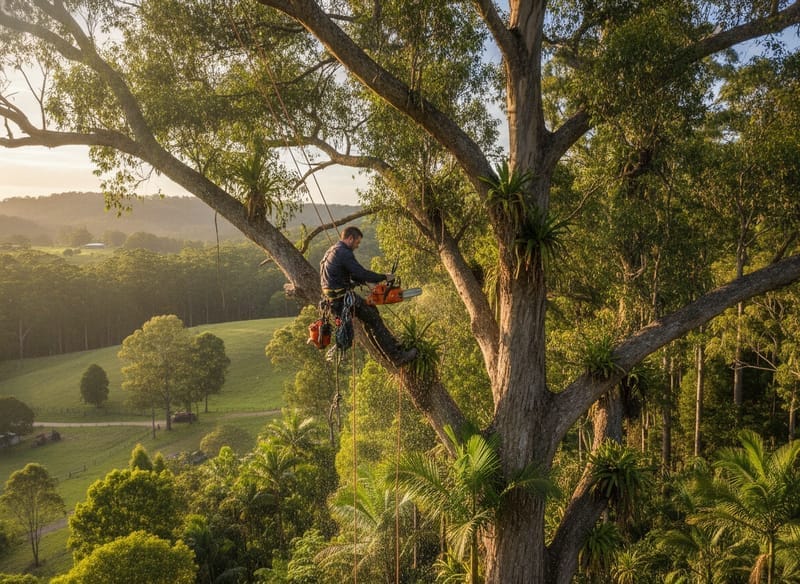
Safely reduces tree stature to keep clear of powerlines, roofs, and boundary fences.
Professional height reduction, canopy management, and safe tree cutting solutions
Canopy control and tree cutting across Millner and Darwin
Homeowners searching for Tree Lopping Millner often need fast height reduction or clearance around buildings. While crude topping causes severe structural defects, our team provides safe canopy reduction cuts that manage size while keeping your trees structurally sound.
In Millner's tropical climate, trees lopped improperly produce fast-growing epicormic shoots that become dangerously heavy within two wet seasons. Because these shoots attach only to outer bark, they easily tear away in high winds. We prune back to viable secondary leaders to maintain structural integrity.
Safely reduces tree stature to keep clear of powerlines, roofs, and boundary fences.
Avoids the weak, hazardous regrowth typical of unscientific tree lopping.
Maintains a natural, balanced canopy appearance rather than leaving unsightly bare stumps.
We evaluate what you need cut back and assess how the tree species will respond.
We plan selective reduction cuts to suitable growth points rather than indiscriminate topping.
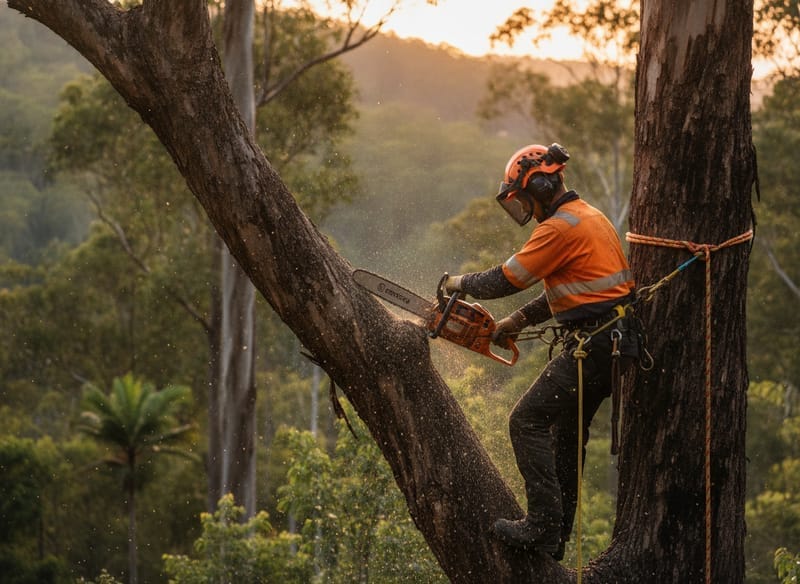
Our team cuts and rigs branches systematically, keeping people and property safe.
We chip all waste and sweep the worksite clean before leaving.
Welcome to Darwin Arborist. When your canopy grows out of control during our wet season, professional Tree Lopping Millner services are essential for keeping your property safe and manageable. Here in Millner, and across surrounding suburbs like Rapid Creek, Jingili, and Moil, the combination of our monsoon climate and fast-growing tropical species means trees can quickly dominate your block, block natural light, or encroach on your roofline. Many homeowners ask us to lop a tree when they actually need it made smaller, safer, or less intrusive. With the recent memory of Severe Tropical Cyclone Fina fresh in our minds, getting large canopies under control before the November to April storm season is a priority for every responsible property owner. Whether you are managing an overgrown African Mahogany or taming a spreading Sea Almond, our team understands exactly how to reduce a tree's size without destroying its structural integrity or leaving it vulnerable to rot and termite attack.
There is a massive difference between professional canopy management and indiscriminate hacking. Historically, lopping meant chopping the top off a tree, leaving large, ugly stubs. When inexperienced operators or eager DIYers attempt this, the results in Darwin's climate are disastrous. A crude topping cut removes the tree's primary energy source and exposes massive wounds that rarely heal before our monsoonal rains introduce rot. Worse still, the tree reacts by pushing out rapid, weakly attached epicormic growth. When the next big blow hits—whether it's a routine wet season squall or an event like Cyclone Fina—these poorly attached branches are the first to snap. We saw this extensively with African Mahoganies during Cyclone Marcus; poor structural management combined with shallow root systems led to widespread failure. Our approach to tree reduction provides a sustainable solution. We follow the strict guidelines of AS4373 (Pruning of Amenity Trees). Instead of leaving sheer stumps, our climbers make clean cuts at the branch collar. This promotes rapid healing and structural stability. We ensure that when you ask us to reduce the size of your tree, we do it in a way that preserves the tree's health, looks aesthetically pleasing, and genuinely reduces your cyclone risk rather than amplifying it.
When our clients request Tree Lopping Millner, we assess the tree and apply the correct arboricultural technique to achieve the desired size reduction safely. We never practice harmful topping; instead, our climbers utilise specific AS4373-approved pruning methods to reduce canopy weight and height.
This is the proper arboricultural alternative to lopping. Our climbers selectively reduce the overall height and spread of the canopy by cutting branches back to a lateral branch large enough to assume the terminal role. This keeps the tree smaller while maintaining its natural shape and structural integrity, preventing the flush of weak epicormic growth.
Often, a tree doesn't need to be shortened from the top, but rather raised from the bottom. We meticulously remove lower branches to increase clearance for pedestrians, driveways, or outbuildings. Under City of Darwin By-Law 103, this is highly effective for fulfilling your obligation to keep verges and footpaths clear of obstruction.
Sometimes just one or two dominant branches are causing the issue, rubbing against rooflines or extending over powerlines. We isolate and safely remove these specific problem limbs without stripping the rest of the foliage, ensuring the tree retains enough leaf mass to thrive in our tropical heat.
We selectively remove secondary branches throughout the crown to reduce wind resistance and allow more light into your yard. By letting our monsoon storm winds pass through the canopy rather than catching it like a sail, we significantly reduce the risk of windthrow—especially important for trees sitting on Darwin's shallow lateritic hardpans.
Delivering professional tree reduction requires precision, especially in the established residential streets of Millner. From the moment you contact us, our team manages the entire process to ensure a safe, efficient, and tidy outcome.
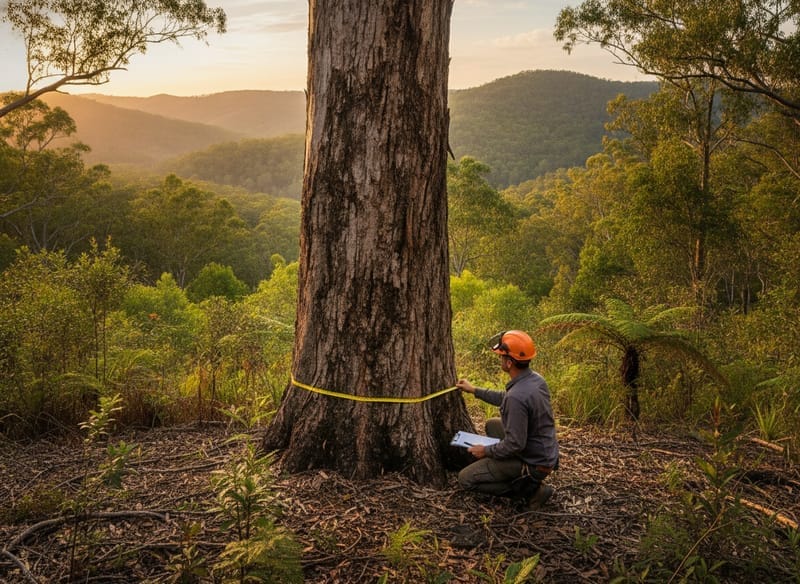
First, we visit your property for a comprehensive site assessment. We inspect the target tree, evaluate the access for our trucks and chippers, and discuss exactly what you want to achieve. If you are dealing with an overbearing Banyan or an overgrown Darwin Woollybutt, we will explain the best reduction techniques to meet your goals without harming the tree. We then provide a transparent, fixed-price quote with no hidden surprises.
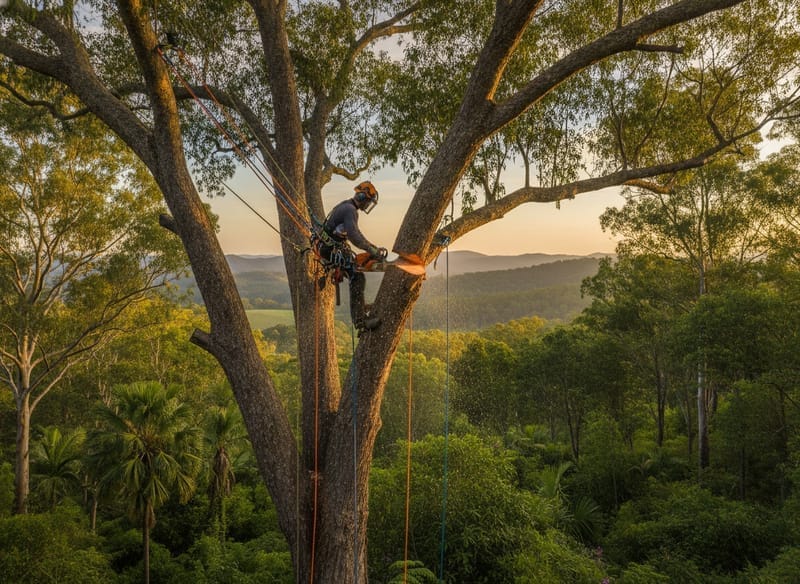
On the day of the job, our AQF Level 3 climbers arrive fully equipped with ropes, harnesses, and top-handle climbing saws. We establish a safe drop zone, protecting your gardens, fences, and lawns. Using advanced rigging techniques, we carefully lower heavy limbs to the ground rather than letting them crash down.
Once the canopy is reduced to the agreed specifications, our ground crew takes over. We process all the removed branches through our industrial wood chippers, turning bulky limbs into useful mulch. Finally, we rake and blow down your paths and driveways, ensuring we leave your Millner property significantly safer and cleaner than we found it.
Tree work in Darwin's demanding conditions requires absolute professionalism. Our business is fully insured with comprehensive public liability and WorkCover, giving you complete peace of mind when our team is operating heavy machinery or suspended above your roofline.
Every size reduction and canopy management job we undertake adheres strictly to AS4373 standards. Our operations are spearheaded by AQF Level 3 qualified arborists who hold all necessary high-risk tickets, including working at heights, elevated work platform (EWP) operation, and advanced chainsaw cross-cutting. We do not take shortcuts with safety or tree health. By relying on highly trained staff, we ensure your property is protected at every stage of the project.
Managing trees in Millner requires specific local knowledge. The soil here features a shallow lateritic hardpan over sandy clay, which restricts deep root growth. When heavy wet season rains saturate the ground, trees with large, top-heavy canopies—like the African Mahoganies planted after Cyclone Tracy—are highly susceptible to windthrow. Regular, professional canopy reduction is the best defence against these local soil and climate realities.
When it comes to council regulations, City of Darwin operates quite differently from southern councils. There is no private land tree permit, no significant tree register for standard private blocks, and the Northern Territory Planning Scheme's vegetation overlays rarely apply to urban residential zones like Millner.
In fact, the regulations primarily focus on what you must clear. City of Darwin By-Law 103 requires property owners to trim vegetation so it does not obstruct roads or footpaths. This means you generally have the freedom to manage or reduce trees on your own block without tedious council paperwork, but you have a strict legal duty to keep your boundary lines clear.
Once our team has completed the lopping and reduction work, proper aftercare is vital. While we take every care to minimise stress, the tree will need energy to compartmentalise its pruning wounds. Ensure you water deeply but infrequently during the dry season to encourage downward root growth, avoiding the shallow balled roots that lead to cyclone failures. Keep an eye out for rapid, straight-up epicormic shoots over the next few months. A small amount of regrowth is normal, but excessive sprouting may need future management. We recommend scheduling an inspection every two to three years for fast-growing tropical species to maintain the reduced canopy size and ensure your property remains prepared for the next storm season.
Pricing for tree lopping and canopy reduction in Millner depends on the scope of cutting and site access.
We provide competitive, itemised quotes outlining exact cut specifications.
We provide canopy reduction and tree cutting services throughout Millner and surrounding areas.
Speak with our qualified arborists for safe height reduction and canopy cutting.
Get a Free Quote