Structural Protection
Stop fallen timber from causing further structural crushing or water ingress to your home.
We make safe and remove fallen and dangerous trees threatening Fannie Bay homes and accessways.
Assisting Fannie Bay, Parap, East Point, and Darwin-wide properties with tree hazards.
When tropical storms strike Fannie Bay, heavy winds and waterlogged soils can suddenly topple mature trees. Our emergency tree removal service focuses on making your property safe and eliminating immediate structural threats.
Fannie Bay's open exposure to squalls moving across Port Darwin creates severe wind shear. When combined with saturated laterite soils, large trees can suffer catastrophic windthrow without warning.
Stop fallen timber from causing further structural crushing or water ingress to your home.
Quickly reopen driveways, gates, and essential access points blocked by fallen debris.
Remove unstable hanging limbs and leaning trunks that pose serious risks to family and neighbours.
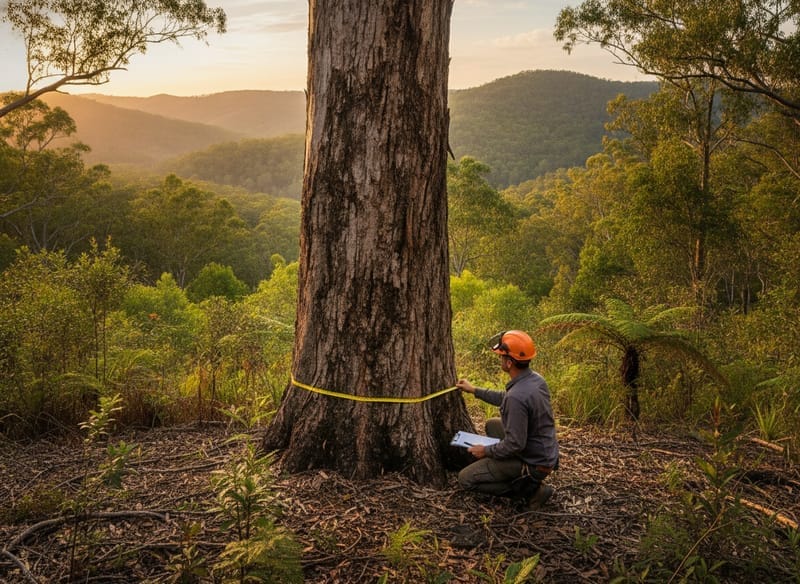
We evaluate electrical hazards, structural stability, and establish a clear exclusion zone.
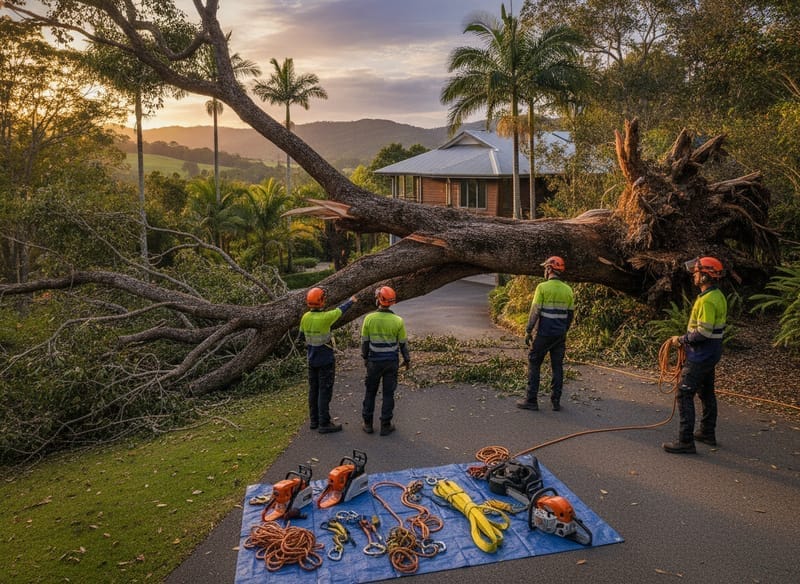
We secure the tree with heavy-duty ropes and winches to prevent shifting while cuts are made.
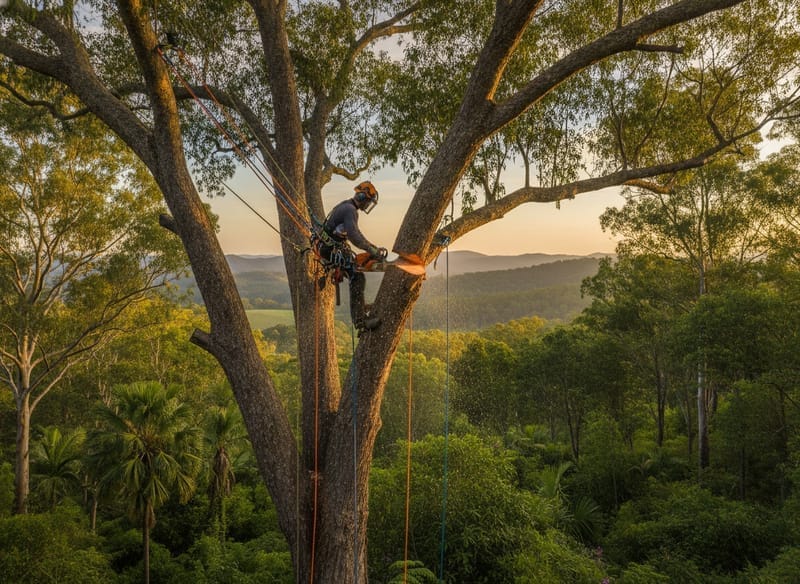
Our arborists carefully relieve branch compression and dismantle the tree in controlled sections.
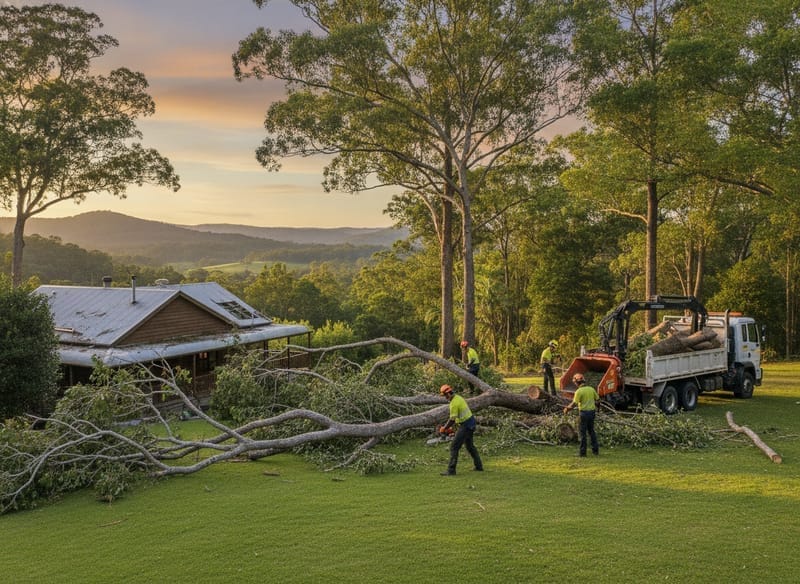
We chip brush, clear pathways, and stack or haul away heavy logs to leave the property safe.
Fannie Bay properties face intense storm fronts, saturated ground, and sudden wind gusts that can uproot large, shallow-rooted trees in an instant. When a mature African Mahogany or Banyan tree fails and threatens your roof, driveway, or family, you need rapid, decisive action. At Darwin Arborist, our local team is on standby for Emergency Tree Removal Fannie Bay when you need us most. We understand the panic of a sudden structural failure, a hung-up limb over your carport, or an uprooted tree leaning precariously in saturated lateritic soils. Our experienced climbers and heavy-machinery operators secure the hazard, ensuring your property is made safe. We provide a true emergency response for homeowners, builders, and property managers throughout the area. With fully equipped tipper trucks, high-capacity chippers, and AQF-qualified arborists ready to deploy, we take control of the chaos and restore safety to your property.
When a tree fails across a Fannie Bay property, the immediate urge might be to grab a chainsaw and start clearing. However, storm-damaged and uprooted trees are incredibly unpredictable. A fallen tree is under immense tension and compression forces; a single incorrect cut can cause the trunk to snap back, roll, or spring upward with lethal force. Relying on an under-qualified operator or attempting DIY clearance is a massive risk to your safety and your property. Furthermore, poor removal practices during an emergency can cause secondary damage to your home, fencing, or underground services. We see many property owners left with shattered driveways and damaged roofs because a poorly trained individual did not understand how to rig and lower heavy timber safely. Our qualified arborists follow strict safety protocols and AS4373 standards, even in a crisis. We use advanced rope-access techniques, cranes, and elevated work platforms (EWPs) to systematically dismantle dangerous trees. By choosing us, you guarantee that the hazard is removed methodically, protecting your home, your family, and your financial liability during a highly stressful event.
We deploy specialised arboricultural techniques to secure and dismantle dangerous trees safely, adapting to the specific failure and access constraints of your property.
When full removal is not possible due to active storms or night-time conditions, we stabilise the site. This involves removing immediate hazards, securing hung-up limbs with heavy-duty rigging, and clearing access paths before returning for the complete dismantle.
Uprooted trees store massive kinetic energy. Our AQF-qualified operators read the wood's tension and compression points, executing precise relief cuts to prevent dangerous barber-chairing or sudden rolling during the extraction process.
For massive failures, such as a large African Mahogany resting on a roof, we utilise crane-assisted removal. This allows us to lift multi-ton timber sections directly off your structure without adding any further weight or structural stress to the building.
In tight Fannie Bay residential blocks where machinery cannot access, our climbers use friction devices, blocks, and heavy-duty rigging ropes to lower hazardous branches segment by segment, completely avoiding underlying assets.
When you call us for an emergency, time is critical. Our process is designed to eliminate the immediate threat and secure your property as quickly as possible. First, we conduct a rapid phone triage. We will ask you about the tree's size, its current position, and what assets are threatened. For severe emergencies—such as a tree actively resting on a house or powerline—we dispatch our team. Upon arrival, our senior arborist performs a rapid site risk assessment. We identify overhead hazards, structural weaknesses in the failed tree, and the safest access routes. If the situation is highly volatile, we execute a make-safe operation to neutralise the primary danger. Once the site is stable, we proceed with the systematic removal of the tree. Using our top-handle climbing saws, EWPs, and rigging gear, we carefully dismantle the timber, lower it to the ground, and process it through our high-capacity wood chippers. Finally, we provide all necessary documentation and photographs for your insurance claim, leaving your property safe, clear, and ready for repair.
Emergency tree work carries inherent risks, which is why compliance is non-negotiable. Darwin Arborist operates with comprehensive public liability and WorkCover insurance, protecting your property entirely while we are on site.
Our leading climbers and assessors hold AQF Level 3 and AQF Level 5 qualifications, ensuring all hazard assessments and complex dismantling operations are handled by genuine experts. We document the damage with detailed photographs before starting any work, providing you with the exact itemised reports and arborist assessments required by your insurance company to streamline your claim.
Dealing with tree failures in Fannie Bay requires specific local knowledge. The legacy of Cyclone Fina in November 2025 left many trees structurally compromised, and the lateritic red soil underlying our suburbs creates a dangerous hardpan. During the intense wet season, this soil waterlogs rapidly, causing shallow-rooted species like African Mahogany and Banyan trees to uproot entirely in heavy monsoon gusts. Fortunately, removing a dangerous or fallen tree on residential land here is straightforward from a regulatory standpoint. The City of Darwin does not require private land tree permits, nor is there a significant tree register binding your house block. While the NT Planning Scheme's vegetation overlays apply to acreage out in the rural belts, standard Fannie Bay properties are exempt. This means when a storm hits and an Emergency Tree Removal Fannie Bay is required, our team can respond and remove the hazard without waiting for council red tape.
Once the fallen tree is cleared, the recovery phase begins. We recommend covering any exposed structural damage to your roof or fencing to prevent water ingress during subsequent downpours. Leave the root ball depression untouched until we can properly backfill or grind the stump, as the saturated lateritic soil can be highly unstable. Keep an eye on any surrounding trees that were exposed to the same wind forces; they may have sustained hidden root damage. Call us back for an AQF Level 5 arborist assessment if you notice soil cracking or new leans in your remaining canopy.
Emergency tree work pricing in Fannie Bay is based on the complexity, equipment required, and urgency of the hazard.
We assess the hazard on-site and provide an honest, transparent price before starting work.
We provide emergency tree removal across Fannie Bay and all surrounding Darwin communities.
Contact our qualified arborist team for assistance with dangerous and fallen trees.
Call for Assistance